Monocle personalizes your automated flows at the individual level, which works great for the customers already engaging with triggered sequences. But what about everyone else on your list? When you’re planning a campaign send and need to predict who’s ready to buy, Monocle alternatives that focus on proactive audience selection make more sense. Most of your email volume lives in campaigns, not flows, so optimizing flow deliverability won’t protect your overall sender reputation. Let’s look at the tools that predict campaign audiences and clean lists instead of reacting to triggers.
TLDR:
Monocle optimizes automated flows, but campaigns drive most email revenue and sender reputation.
Orita predicts high-intent customers for campaigns, removes bots, and reactivates dormant subscribers.
Brands like Caraway rescued $1M+ and GoodOnya boosted deliverability scores 30 points with Orita.
Flow improvements won’t fix overall deliverability since flows represent smaller email volume than campaigns.
Orita builds custom ML models that score subscribers daily and sync segments to your existing ESP.
What is Monocle and How Does It Work?
Monocle is an AI personalization tool built for Shopify brands looking to optimize automated email and SMS flows. Rather than sending the same journey to every customer, it analyzes individual signals to adapt what each person receives.
The tool deploys AI agents that make real-time decisions about your triggered sequences. These agents determine who gets messaged, when to send, how many touches to include, and whether to offer a discount. The focus is on automated journeys like abandoned cart sequences, welcome series, and post-purchase flows.
Monocle integrates with your existing ESP (like Klaviyo) and layers its AI logic on top. Instead of replacing your email infrastructure, it adjusts journey behavior based on predicted customer actions and discount sensitivity. If someone will likely convert without an incentive, Monocle’s agent might skip the coupon. If another shopper needs three reminders instead of two, the AI extends the sequence.
The result is flow-level personalization that adapts to each customer’s likelihood to engage, treating each journey as a dynamic conversation rather than a static set of rules.
Why Consider Monocle Alternatives?
Monocle excels at 1:1 journey orchestration and offer personalization for automated flows. If you want to optimize triggered sequences with AI-driven timing and discount logic, it delivers real value.
But many brands evaluate alternatives because Monocle focuses exclusively on flow optimization rather than campaign audience selection. Flows represent a smaller portion of overall email traffic compared to campaigns. Improving flow deliverability won’t move the needle on your overall sender reputation or inbox placement.
Monocle optimizes the reaction after a customer takes an action. It doesn’t predict which dormant or lapsed customers should receive proactive campaign sends. If you’re running a Memorial Day sale or a new product launch, Monocle won’t tell you who to include in that audience.
Brands needing help identifying high-intent customers for bulk campaigns, cleaning lists to improve deliverability, or reactivating dormant subscribers will find that Monocle lacks native campaign-level audience segmentation. It doesn’t offer predictive scoring for one-off sends.
Monocle relies on engagement signals from customers who have already entered a flow. It can’t identify non-obvious buyers hiding in inactive segments before they engage. If someone hasn’t triggered a flow recently, Monocle has no mechanism to surface them for reactivation campaigns.
Best Monocle Alternatives in January 2026
1. Orita (Best Overall Alternative)
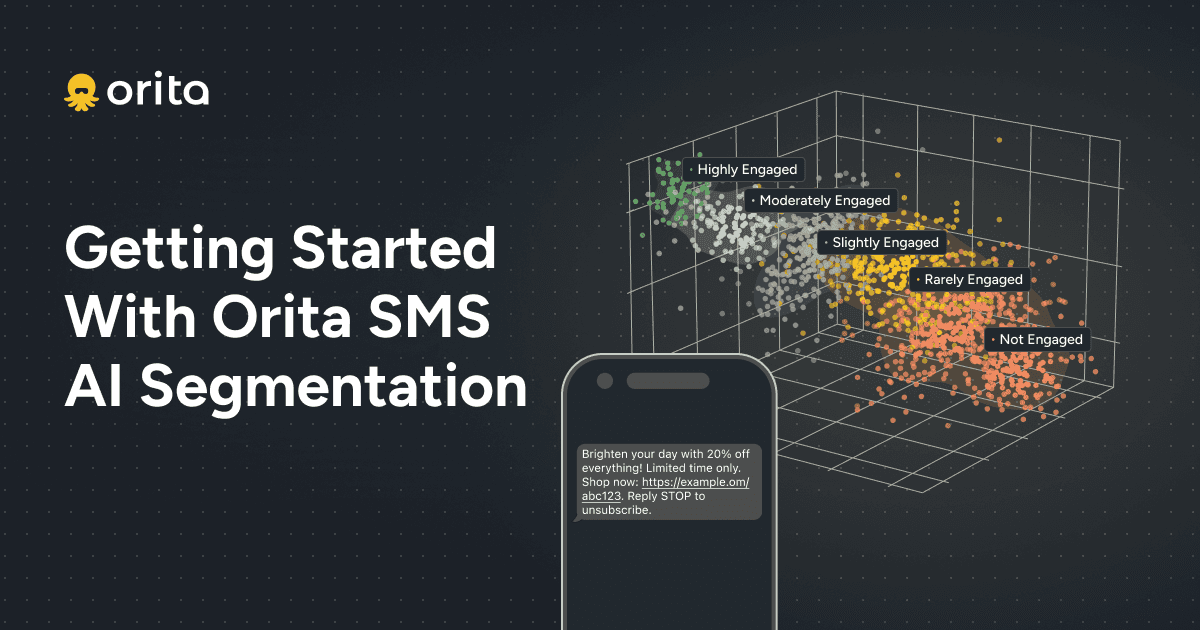
Orita predicts which customers are most likely to engage or purchase for each campaign send. The tool builds custom machine learning models from first-party data to score every subscriber daily, syncing AI-generated segments directly to ESPs like Klaviyo.
Core features include custom ML models that predict purchase intent and click likelihood, daily AI scoring with automatic segment syncing, bot removal that improves deliverability by targeting engaged humans only, and revenue recovery from dormant segments by identifying renewal signals hidden in suppressed lists.
Orita works for mid-size to enterprise DTC brands with large subscriber bases (50k+ contacts) who need to maximize campaign revenue, improve deliverability, and reactivate lapsed customers without aggressive list suppression.
The difference from Monocle: Orita optimizes campaigns (where most email volume lives) rather than flows, delivers sustainable deliverability improvements through real engagement rather than flow tweaks, and identifies high-intent customers proactively rather than reacting to triggers.
2. Mailability.io
Mailability.io optimizes email flow performance through AI-powered deliverability enhancements for triggered sequences. The product analyzes individual flows and adjusts send behavior to improve inbox placement within automated journeys.
Features include flow-specific deliverability optimization for triggered sequences, AI adjustments to flow timing and sending patterns, and performance monitoring for individual automated flows. It works for brands wanting to improve deliverability within their automated flow infrastructure without changing their campaign strategy.
The limitation: Mailability.io operates as a black box with limited transparency into how decisions are made. Like Monocle, it focuses only on flows rather than campaigns, meaning improvements won’t impact overall deliverability since flows represent smaller email volume. It lacks campaign-level audience prediction and list cleaning capabilities.
3. Maverick
Maverick helps brands send AI-generated personalized videos at scale by allowing users to record themselves once and generating endless personalized videos where they greet each customer by name. The product automates personalized video creation for email flows like post-purchase thank you messages, abandoned cart recovery, and welcome sequences.
Maverick works for brands wanting to add authentic, personalized video content to their email marketing to increase engagement and create memorable customer experiences. However, Maverick personalizes creative content but doesn’t predict which customers should receive campaigns or analyze list health. It needs strong segmentation from tools like Orita to ensure personalized videos reach the right recipients at the right time.
4. Black Crow AI
Black Crow AI identifies shoppers, predicts their behavior, and automates email and SMS marketing flows to grow subscriber lists and maximize customer lifetime value. Features include real-time predictive analytics for customer lifetime value and purchase propensity, SmartID for privacy-friendly user recognition across sessions, and AI-powered audience creation for Meta and Google.
Black Crow AI works for brands wanting to expand their known audience through identity resolution and sync predictive audiences to paid media channels. However, it focuses on identity resolution and paid media audience building rather than email deliverability or list health. It lacks bot removal, list cleaning capabilities, and campaign-level engagement prediction for existing subscribers.
5. Retentics
Retentics helps DTC brands maximize customer lifetime value through AI-powered predictive analytics and automated segmentation for Klaviyo users. Features include predictive customer lifetime value scoring, churn risk identification, automated segment creation in Klaviyo based on ML predictions, and replenishment cycle tracking for consumable products.
Retentics works for brands with subscription or repeat purchase models wanting to automate lifecycle segmentation in Klaviyo. However, it predicts long-term customer value and churn risk but doesn’t optimize campaign sends or improve deliverability through engagement targeting. It creates segments based on predicted lifecycle stage rather than daily purchase intent for upcoming campaigns.
Feature Comparison: Monocle vs Top Alternatives
The table below breaks down where each tool invests its capabilities and where gaps exist for brands evaluating their needs.
Feature | Monocle | Orita | Mailability.io | Maverick | Black Crow AI | Retentics |
|---|---|---|---|---|---|---|
Campaign Audience Prediction | No | Yes | No | No | No | Limited |
Flow Optimization | Yes | No | Yes | Yes | Yes | No |
Daily Predictive Scoring | No | Yes | No | No | Yes | Weekly/Monthly |
Bot Removal & List Cleaning | No | Yes | No | No | No | No |
Deliverability Improvement | Flow-level only | List-wide | Flow-level only | Limited | No | No |
Reactivation of Dormant Customers | No | Yes | No | No | Limited | No |
Custom ML Models Per Brand | Yes | Yes | No | No | Yes | Yes |
Multi-Channel (Email/SMS) | Yes | Yes | Limited | Yes | Yes | Yes |
CLV Prediction | No | No | No | No | No | Yes |
Churn Risk Scoring | No | No | No | No | No | Limited |
Monocle and Mailability.io share a similar constraint: both optimize flows but lack campaign audience prediction. Orita stands alone in delivering list-wide deliverability improvement and dormant customer reactivation through daily predictive scoring. Black Crow AI offers predictive analytics but skips deliverability and bot removal entirely. Maverick personalizes creative without touching segmentation or list health.
If your goal is campaign revenue growth and sender reputation protection, look for tools offering campaign audience prediction and list-wide deliverability. If you want flow personalization, Monocle delivers that focus.
Why Orita is the Best Monocle Alternative
Monocle optimizes automated flows effectively, but campaigns drive the majority of email revenue for most brands. Flows are triggered by customer actions and represent a smaller slice of total volume. Orita fills the gap by predicting which customers are ready to buy for each campaign send.
Instead of reacting to customer behavior after they enter a sequence, Orita proactively identifies non-obvious buyers before they engage. The tool analyzes first-party data to find revenue hiding in suppressed lists, removes bots that skew metrics, and targets engaged humans to improve sender reputation across your entire program.
Brands see results that compound over time:
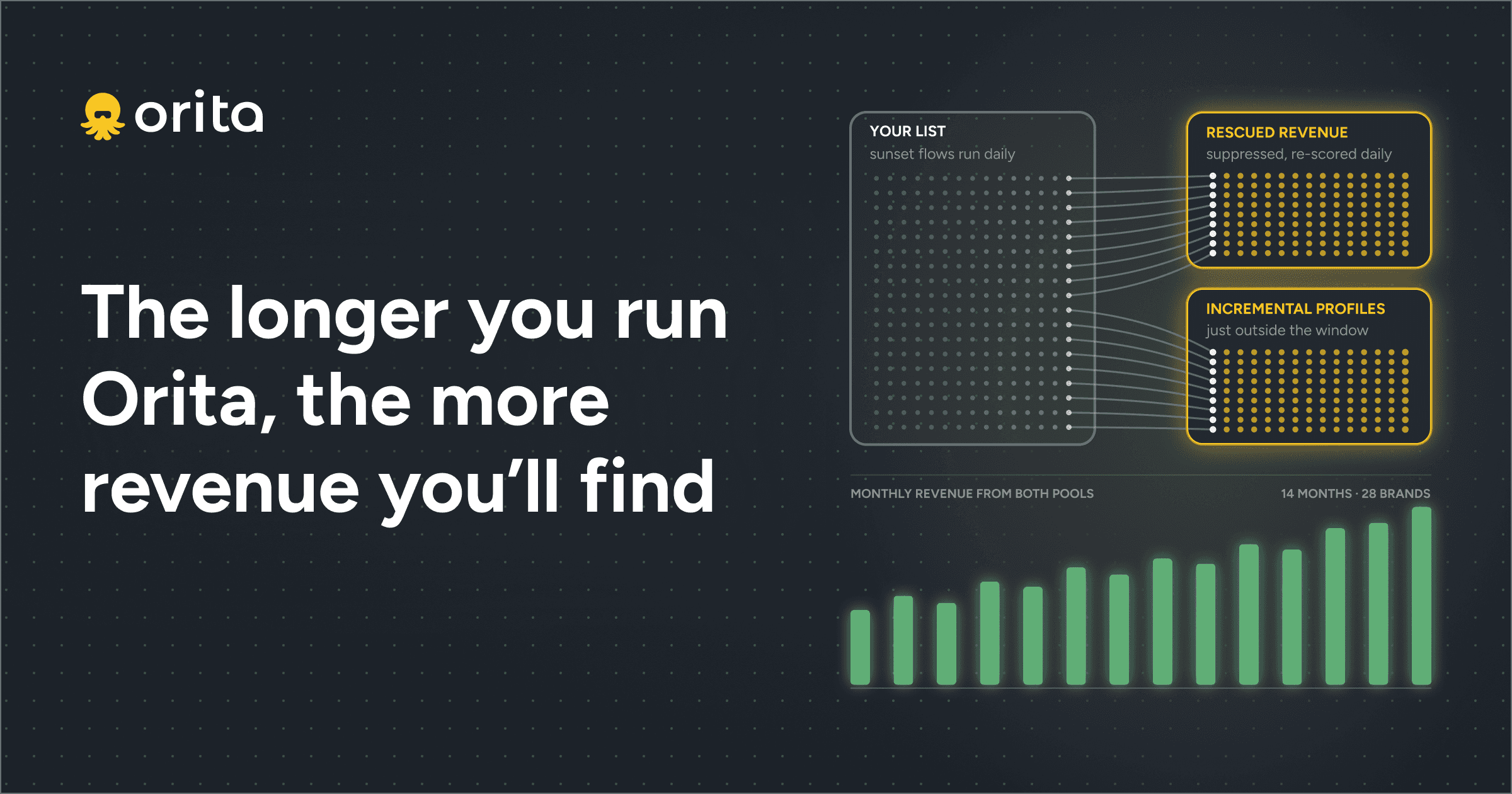
Caraway rescued over $1M from previously suppressed segments by reactivating dormant customers who were actually ready to purchase
GoodOnya improved their Klaviyo Deliverability Score by 30 points through better engagement targeting
Spanx lifted campaign revenue by 31% while boosting click rates 36% by sending to the right people at the right time
Orita integrates as an add-on layer to your existing ESP. No system changes, no migrations, no added site load. The solution works alongside Klaviyo and other messaging tools you already use. Daily AI scoring happens behind the scenes, syncing high-intent segments automatically.
If you need flow personalization, Monocle delivers that focus. If you need campaign revenue growth, deliverability protection, and dormant customer reactivation, Orita predicts who to send to before you hit publish.
Final Thoughts on Evaluating Monocle Alternatives
Monocle personalizes automated flows effectively, but campaigns drive the majority of revenue for most brands. Tools like Orita predict purchase intent for bulk sends, removing bots and targeting engaged customers to protect your sender reputation. Your flows react to customer behavior, while your campaigns need proactive prediction about who’s ready to buy. Match your tool choice to where your biggest opportunity sits.
FAQ
Why would someone look for alternatives to Monocle?
Monocle specializes in flow optimization, but flows represent a smaller portion of email volume compared to campaigns. Brands often seek alternatives when they need campaign-level audience prediction, list-wide deliverability improvements, or proactive reactivation of dormant subscribers—capabilities Monocle doesn’t provide since it focuses exclusively on triggered sequences.
What should you prioritize when comparing Monocle alternatives?
Look for tools that address campaign audience selection (not just flow optimization), offer list-wide deliverability improvements through real engagement, and provide daily predictive scoring to identify high-intent customers before you send. If most of your revenue comes from campaigns rather than flows, prioritizing campaign-level capabilities will deliver bigger results.
When does it make sense to switch from a flow-focused tool to a campaign optimization platform?
Consider switching when you’re struggling with campaign performance (low engagement, poor deliverability), leaving revenue in suppressed segments, or spending significant time manually building audiences for one-off sends. If improving flow performance hasn’t moved your overall sender reputation, you likely need campaign-level audience intelligence.
Can Orita work alongside Monocle or other flow optimization tools?
Yes—Orita acts as an add-on layer to your existing ESP and integrates with tools you already use. If Monocle handles your flow personalization, Orita can predict campaign audiences, clean your list, and reactivate dormant customers without disrupting your flow infrastructure. The tools solve different problems and can complement each other.